
What Is Multiple Sclerosis? A Complete Overview
MS is the most common progressive neurological disease of young adults — affecting nearly 1 million Americans. Learn how it works, who it affects, its four types, symptoms, and the latest treatment options.
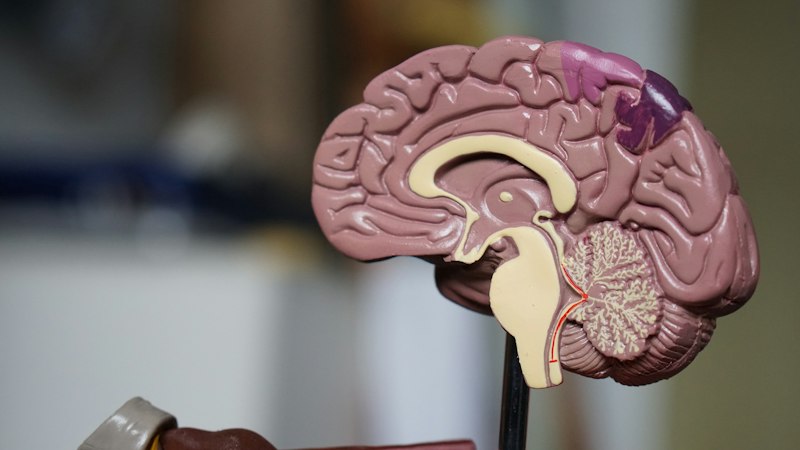
Multiple sclerosis is a lifelong autoimmune disease that attacks the brain and spinal cord — and it can look completely different from one person to the next. For some, it means occasional relapses followed by recovery. For others, it means slow, steady progression.
KEY STATISTICS • ~1M Americans living with MS • 450+ new U.S. diagnoses every week • 3× more common in women than men • Average age at diagnosis: 36
WHAT IS MULTIPLE SCLEROSIS?
Multiple sclerosis (MS) is a chronic autoimmune disease in which the body's immune system mistakenly attacks the myelin sheath — the protective coating surrounding nerve fibers in the central nervous system. When myelin is damaged, nerve signals slow down, become distorted, or stop entirely, causing a wide range of neurological symptoms.
The term "multiple sclerosis" refers to the multiple areas of scarring (sclerosis) that form on the brain and spinal cord over time. MS is not contagious and not directly inherited — though having a first-degree relative with MS increases your own risk by 2 to 5 times.
Healthy nerve fibers are wrapped in myelin, which acts like insulation on an electrical wire. In MS, the immune system attacks and strips this myelin. The resulting scar tissue (plaques or lesions) disrupts signal transmission. Over time, the nerve fibers themselves can also become permanently damaged.
THE FOUR TYPES OF MS
-
RRMS (Relapsing-Remitting MS) — ~85% of cases. The most common form. Defined by clearly defined attacks (relapses) followed by periods of partial or full recovery (remission). Most people are initially diagnosed with RRMS.
-
SPMS (Secondary Progressive MS) — Many people with RRMS eventually transition to SPMS, where disability accumulates steadily with or without relapses.
-
PPMS (Primary Progressive MS) — ~10–15% of cases. Steady neurological decline from onset with no distinct relapses. Only one FDA-approved treatment exists.
-
CIS (Clinically Isolated Syndrome) — A first episode of neurological symptoms lasting at least 24 hours. Not yet officially MS but may develop into it.
SYMPTOMS
Physical symptoms: • Fatigue (affects up to 80% of people with MS) • Difficulty walking or balance problems • Numbness or tingling in the face, arms, or legs • Muscle weakness, spasms, or stiffness • Vision problems — blurred, double, or loss of vision • Bladder and bowel dysfunction • Dizziness and vertigo • Pain and burning sensations
Cognitive & emotional symptoms: • Cognitive "fog" — memory, attention, and processing speed • Depression (affects up to 50% of people with MS) • Anxiety disorders • Mood swings and emotional changes • Heat sensitivity (Uhthoff's phenomenon)
Fatigue in MS is not ordinary tiredness — it is a profound, debilitating exhaustion that can appear suddenly and is unrelated to activity level.
WHO GETS MS?
MS most often emerges between ages 20 and 50. Women are diagnosed approximately three times more often than men.
Risk factors: • Sex — 74% of U.S. MS cases are female • Geography — More common in temperate climates further from the equator • Family History — First-degree relatives have a 2–5% risk; identical twins have a 20–30% risk • Epstein-Barr Virus — Strong evidence links prior EBV infection to elevated MS risk • Smoking — Increases MS risk and is associated with faster disease progression • Age — Average U.S. diagnosis age is 36
DIAGNOSIS
Diagnosis requires evidence of damage in at least two separate areas of the CNS at different points in time. The process typically involves MRI of the brain and spinal cord, cerebrospinal fluid analysis, and evoked potential tests. The average time from first symptoms to confirmed MS diagnosis has historically been over two years.
TREATMENT: DISEASE-MODIFYING THERAPIES (DMTs)
MS has no cure, but over 20 FDA-approved DMTs are available. DMTs reduce the frequency and severity of relapses, slow disability progression, and prevent new lesions. There has been a major shift toward starting high-efficacy therapies earlier.
The proportion of MS patients starting high-efficacy DMTs more than doubled between 2018 and 2025.
Treatment classes: • Interferons & Glatiramer Acetate (Injectable) — Avonex, Copaxone, Plegridy — Moderate efficacy • Oral DMTs — Tecfidera, Aubagio, Mayzent — Moderate–High efficacy • Anti-CD20 monoclonal antibodies (Infusion) — Ocrevus, Briumvi — High efficacy • Natalizumab (Infusion) — Tysabri — High efficacy • Alemtuzumab / Cladribine — Lemtrada, Mavenclad — High efficacy
Note: Only ocrelizumab (Ocrevus) is FDA-approved for primary progressive MS.
LIVING WITH MS
• Exercise — Regular aerobic and strength training improves fatigue, mood, and mobility • Heat Management — Cooling vests, cold showers, and air conditioning help manage Uhthoff's phenomenon • Mental Health — Depression affects up to 50% of people with MS; therapy and support groups are important • Diet & Nutrition — Anti-inflammatory eating patterns support overall neurological health • Vitamin D — Low vitamin D is associated with higher MS risk and more active disease • Specialized Care — MS centers provide significantly better outcomes than general neurology care
Tags: Multiple Sclerosis, Autoimmune Disease, Neurology, Myelin, RRMS, PPMS, Disease-Modifying Therapy, Fatigue, Chronic Conditions