
Small Intestine Disorders: A Complete Overview
From Crohn's disease and celiac disease to SIBO, short bowel syndrome, and small bowel cancer — learn about the major disorders affecting the small intestine, their symptoms, and treatments.
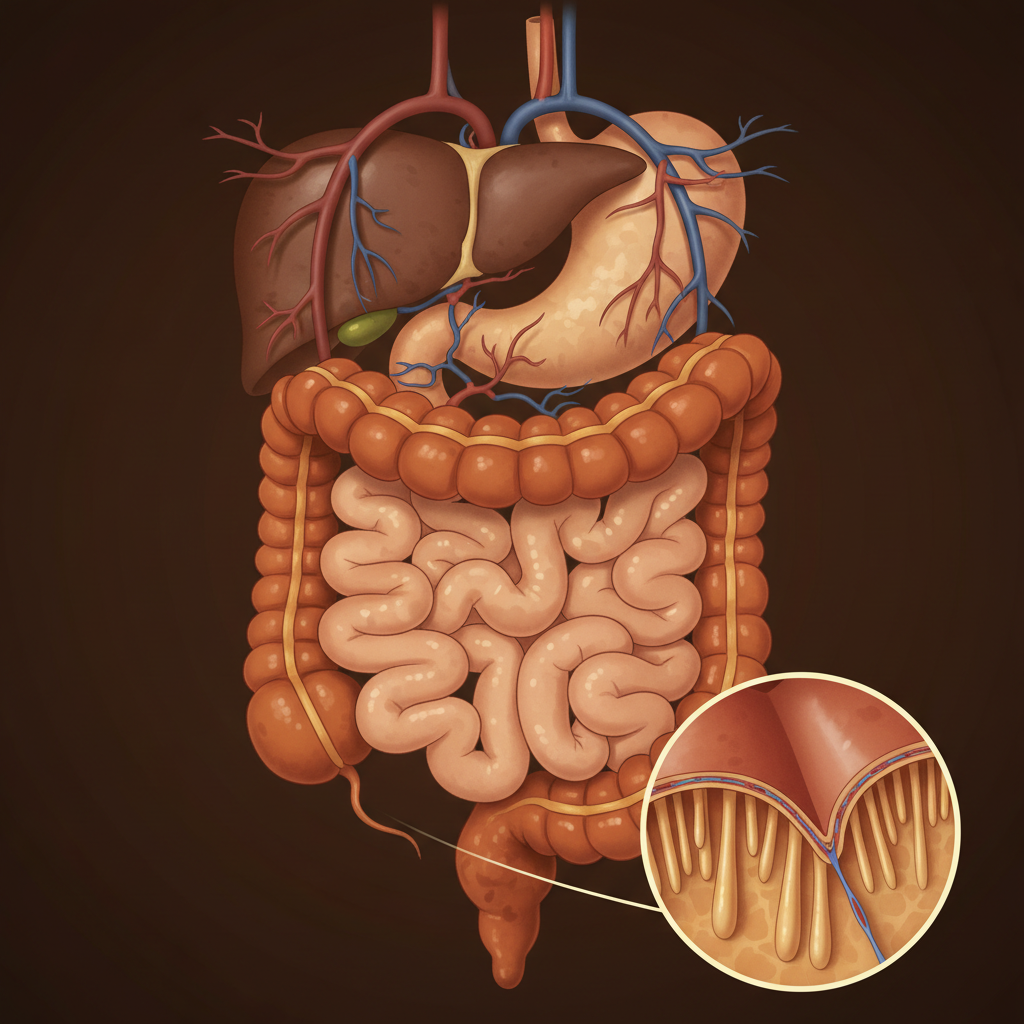
The small intestine is the body's primary nutrient-absorbing organ — a 20-foot tube where food is broken down, vitamins and minerals are extracted, and most of what keeps us alive enters the bloodstream. When the small intestine is damaged, inflamed, overgrown with bacteria, or surgically shortened, the consequences extend far beyond digestion: malnutrition, immune dysfunction, and systemic disease can follow.
Key Statistics
- 3M+ Americans have Crohn's disease — most commonly affecting the small bowel
- ~1% of the U.S. population has celiac disease — most undiagnosed
- ~6–15% of the general population estimated to have SIBO
- The small intestine is 20 feet long — the longest segment of the GI tract
The Small Intestine: Why It Matters The small intestine consists of three segments: the duodenum (where most digestion occurs), the jejunum (primary site of nutrient absorption), and the ileum (absorbs vitamin B12, bile acids, and fat-soluble vitamins). The organ is lined with tiny finger-like projections called villi, creating a surface area roughly the size of a tennis court — all dedicated to absorbing nutrients.
Small intestine disorders impair function in several ways: inflammation damages the mucosal lining (Crohn's disease); autoimmune attack flattens the villi (celiac disease); bacterial overgrowth competes for nutrients and produces gas (SIBO); surgical resection reduces absorptive surface (short bowel syndrome); and malignancy disrupts structure and function (small bowel cancer).
Common Symptoms Across Small Intestine Disorders
- Chronic or recurrent abdominal pain and cramping
- Persistent diarrhea — often watery or fatty (steatorrhea)
- Bloating and excessive gas
- Unexplained weight loss
- Fatigue and weakness from malnutrition
- Nutrient deficiency symptoms (anemia, bone loss, neuropathy)
- Nausea and loss of appetite
- Blood in the stool (red flag requiring urgent evaluation)
- Mouth ulcers, skin rashes, joint pain (extraintestinal symptoms)
Crohn's Disease Chronic autoimmune inflammation penetrating all layers of the intestinal wall. Most commonly affects the ileum and colon (ileocolitis) — but can affect any part of the GI tract. Characterized by "skip lesions" — patchy areas of disease separated by normal tissue. Can cause strictures, fistulas, and abscesses over time.
Symptoms: Abdominal pain (often lower right), persistent diarrhea (sometimes bloody), fatigue, weight loss, fever during flares, joint pain, eye inflammation.
Treatment: Biologics — TNF inhibitors (infliximab, adalimumab), anti-integrins (vedolizumab), IL-12/23 inhibitors (ustekinumab); corticosteroids for acute flares; immunomodulators (azathioprine, methotrexate); surgery for strictures or refractory disease. No cure — treatment targets remission.
Approximately 30% of Crohn's disease involves only the small intestine — and this pattern (ileitis) can be missed on standard colonoscopy. Small bowel imaging with CT or MR enterography, or capsule endoscopy, is essential when small bowel Crohn's is suspected.
Celiac Disease Autoimmune disease triggered by gluten (wheat, barley, rye) in genetically susceptible individuals. Immune attack flattens intestinal villi — drastically reducing absorption surface. Primarily affects the duodenum and proximal jejunum. Most people with celiac disease have atypical or no GI symptoms.
Symptoms: Classic — diarrhea, bloating, weight loss, malabsorption. Atypical (more common) — iron-deficiency anemia, fatigue, osteoporosis, infertility, neuropathy. Dermatitis herpetiformis — intensely itchy blistering skin rash.
Treatment: Strict lifelong gluten-free diet — the only current treatment. Nutritional supplementation (iron, B12, folate, D, calcium). Monitoring for refractory celiac and associated lymphoma risk. Several drug therapies (latiglutenase, tTG2 inhibitors) in Phase 3 trials as of 2025.
An estimated 83% of people with celiac disease in the U.S. are undiagnosed or misdiagnosed — often for years. Anyone with persistent unexplained symptoms should be screened with a simple blood test (anti-tTG IgA antibodies).
Small Intestinal Bacterial Overgrowth (SIBO) Abnormal proliferation of bacteria (or archaea) in the small intestine — normally nearly sterile. Bacteria ferment carbohydrates, producing gas, and compete with host for nutrients. Commonly associated with IBS, Crohn's disease, diabetes, prior abdominal surgery, hypothyroidism, and proton pump inhibitor use.
Symptoms: Severe bloating (worsening after eating), abdominal pain and cramping, diarrhea or constipation, nausea and fatigue, nutritional deficiencies (B12, fat-soluble vitamins).
Treatment: Rifaximin — non-absorbable antibiotic, preferred first-line. Other antibiotics: metronidazole, neomycin (especially for methane-dominant SIBO). Address underlying cause to prevent recurrence. Elemental or low-FODMAP diet as adjunct. Prokinetics to improve small bowel motility.
Studies suggest SIBO may underlie up to 60–80% of IBS cases. Hydrogen and methane breath testing is the primary diagnostic tool.
Short Bowel Syndrome (SBS) Results from surgical removal of large portions of small intestine — typically from Crohn's disease, mesenteric ischemia, volvulus, or trauma. Remaining bowel cannot adequately absorb enough nutrients, fluids, and electrolytes. Many patients require parenteral nutrition (PN) — IV nutrition — indefinitely.
Symptoms: Severe high-volume diarrhea, profound malnutrition and weight loss, dehydration and electrolyte disturbances, fat-soluble vitamin deficiencies, oxalate kidney stones.
Treatment: Parenteral nutrition (PN); teduglutide (Gattex/Revestive) — GLP-2 agonist promoting intestinal adaptation; antidiarrheal agents; intestinal transplantation for selected cases.
Small Bowel Cancer Approximately 13,000 new U.S. cases per year. Major types include: Adenocarcinoma (most common; often in duodenum; associated with celiac disease and Crohn's); Neuroendocrine tumors/NETs (often slow-growing; ileum most common site); Lymphoma (including EATL linked to celiac disease); GIST (gastrointestinal stromal tumor).
Symptoms: Vague abdominal pain, weight loss and fatigue, GI bleeding, obstruction, flushing/diarrhea/wheezing (carcinoid syndrome from NETs).
Treatment: Surgery (curative resection when localized); chemotherapy for adenocarcinoma (FOLFOX, capecitabine); somatostatin analogs for NETs (octreotide, lanreotide); targeted therapy: imatinib for GIST; immunotherapy for select lymphomas.
Celiac disease significantly raises small bowel cancer risk — uncontrolled celiac is associated with a 5-fold increased risk of non-Hodgkin lymphoma and a 40-fold increased risk of small bowel lymphoma.
Other Conditions Affecting the Small Intestine
- Radiation enteritis — damage from cancer radiation therapy causing chronic diarrhea, malabsorption, and strictures
- Mesenteric ischemia — inadequate blood supply causing acute or chronic presentations; can lead to intestinal infarction
- Intestinal adhesions — fibrous bands after surgery causing partial or complete small bowel obstruction
- Tropical sprue & Whipple's disease — rare malabsorptive disorders
How Small Intestine Disorders Are Diagnosed
- Blood tests: CBC, inflammatory markers (CRP, ESR), anti-tTG IgA (celiac), iron, B12, folate, fat-soluble vitamins, albumin
- Endoscopy & biopsy: Upper endoscopy with duodenal biopsy (gold standard for celiac); capsule endoscopy for whole small bowel visualization
- Imaging: CT/MR enterography for bowel wall assessment, strictures, fistulas, and masses
- Breath testing: Hydrogen and methane breath tests for SIBO diagnosis
Red Flags: When to Seek Immediate Care
- Blood in the stool — bright red or tarry black (melena)
- Sudden, severe abdominal pain — may indicate obstruction, ischemia, or perforation
- Significant unintended weight loss over weeks to months
- Signs of bowel obstruction: inability to pass gas or stool, persistent vomiting, abdominal distension
- Persistent high fever with abdominal symptoms
- Jaundice with GI symptoms
Small bowel disorders are frequently misdiagnosed. Because the small intestine is not accessible by standard colonoscopy, disorders in the jejunum and ileum are often missed. Persistent symptoms that don't improve with standard IBS or reflux treatment warrant further evaluation.
This content is for informational purposes only and does not constitute medical advice. Always consult a qualified healthcare provider.