
Throat Cancer: A Complete Overview
Throat cancer encompasses several distinct cancers of the pharynx and larynx. While tobacco-related cases are declining, HPV-related throat cancer has surged — and early detection makes an enormous difference in survival.
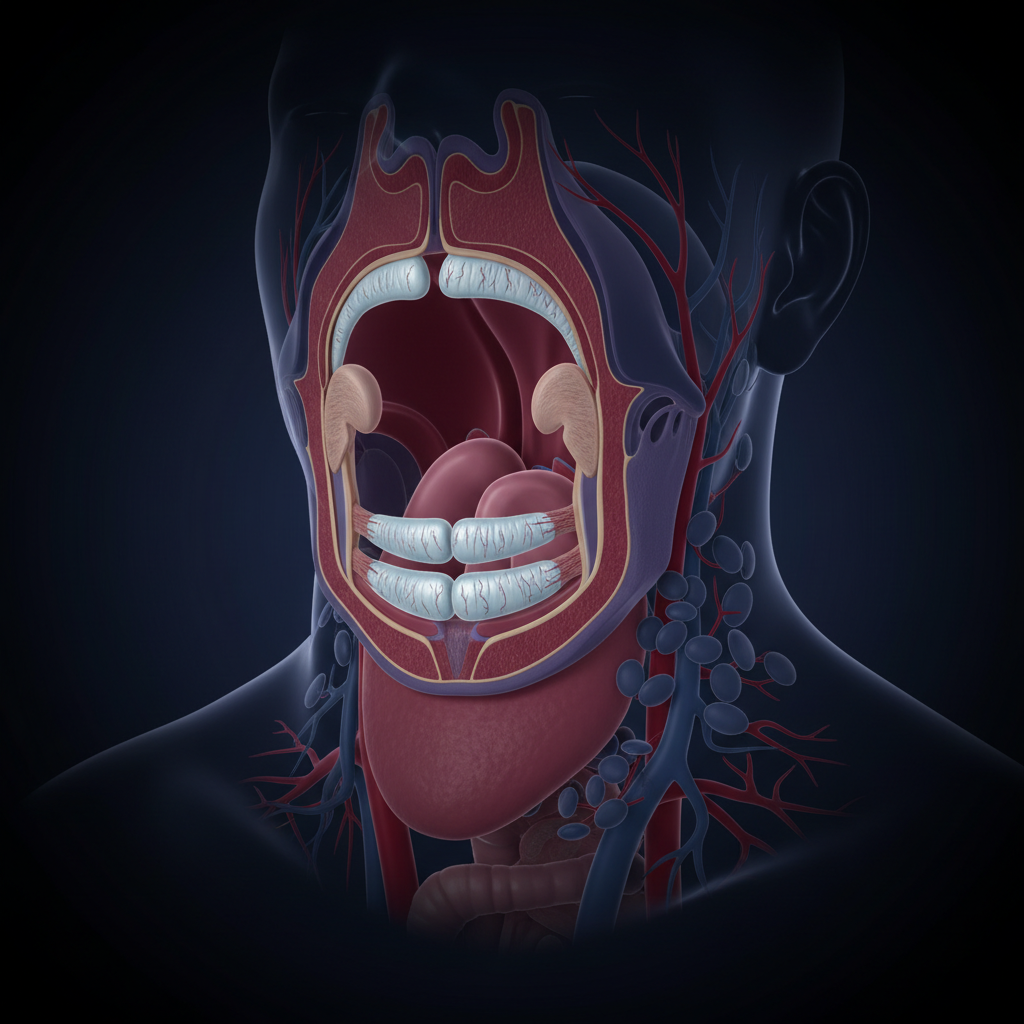
Throat cancer is not a single disease — it is a category of head and neck cancers that can arise in different anatomical regions of the throat and voice box, with different causes, behaviors, and treatment approaches. What they share is that early diagnosis dramatically improves outcomes, and that the risk landscape is shifting: tobacco-related cancers are declining while HPV-related cancers are becoming one of the fastest-rising cancers in the U.S.
Key Statistics
- ~34,000 new U.S. throat cancer cases estimated in 2026 (pharynx + larynx)
- Men are 5× more likely than women to develop laryngeal cancer
- Oropharyngeal cancer linked to HPV is rising sharply — particularly in men
- ~60% 5-year relative survival rate for laryngeal cancer (all stages)
Understanding the Anatomy The throat consists of two main structures — the pharynx (the tube connecting the mouth and nasal cavity to the esophagus and larynx) and the larynx (the voice box, which contains the vocal cords and controls breathing and speaking). The pharynx runs from behind the nose (nasopharynx) down through the throat (oropharynx — tonsils, soft palate, base of tongue) to the entrance of the esophagus (hypopharynx). The larynx sits below the pharynx and consists of the supraglottis, glottis (vocal cords — where ~60% of laryngeal cancers arise), and subglottis.
Types of Throat Cancer Throat cancers are classified by anatomical location. The vast majority are squamous cell carcinomas.
-
Oropharyngeal Cancer — Tonsils, base of tongue, soft palate, posterior pharyngeal wall. The most common and fastest-growing type in the U.S. — now predominantly HPV-related. HPV-positive oropharyngeal cancer has significantly better prognosis than HPV-negative disease. Often presents with a neck mass as the first symptom.
-
Laryngeal Cancer — Glottis (vocal cords), supraglottis, subglottis. ~60% arise from the glottis — causing early hoarseness that aids early detection. Strong association with tobacco and alcohol. ~12,290 new U.S. cases estimated in 2026. 5× more common in men.
-
Hypopharyngeal Cancer — Lower pharynx, pyriform sinuses, posterior pharyngeal wall. Relatively rare but aggressive — often diagnosed at advanced stage. High rate of cervical lymph node involvement. Among the poorest-prognosis head and neck cancers.
-
Nasopharyngeal Cancer — Upper pharynx, behind the nose. Rare in the U.S. but common in Southeast Asia. Associated with Epstein-Barr virus (EBV). Highly radiosensitive — radiation therapy is the primary treatment.
The HPV Revolution in Throat Cancer Human papillomavirus — the same virus that causes cervical cancer — is now the leading cause of oropharyngeal cancer in the United States, having surpassed tobacco as the primary driver. HPV-positive oropharyngeal cancer is fundamentally different from tobacco-related throat cancer: it affects younger patients (often 45–65), has a different risk profile, and responds dramatically better to treatment.
- HPV is now the #1 cause of oropharyngeal cancer in the U.S. — ahead of tobacco
- 85%+ 5-year survival for HPV-positive oropharyngeal cancer vs. ~55% for HPV-negative
- Gardasil 9 (HPV vaccine) prevents HPV types responsible for most HPV-related throat cancers
The CDC recommends Gardasil 9 for all adolescents at age 11–12, with catch-up vaccination through age 26. Vaccinating before exposure to HPV provides maximum protection against the HPV strains responsible for oropharyngeal cancer.
Symptoms Throat cancer symptoms vary by location. Hoarseness is an early warning sign for glottic cancers; oropharyngeal and hypopharyngeal cancers often present later.
Common symptoms:
- Persistent sore throat not relieved by antibiotics
- Hoarseness or voice changes lasting more than 2–3 weeks
- Difficulty or pain when swallowing (dysphagia/odynophagia)
- Lump or mass in the neck — enlarged lymph node
- Ear pain (often referred pain from the throat)
- Unexplained weight loss
- Chronic cough or coughing up blood
Type-specific symptoms:
- Nasal congestion, nosebleeds (nasopharyngeal)
- Hearing loss or tinnitus in one ear (nasopharyngeal)
- Breathing difficulty or stridor (advanced laryngeal)
- Sensation of food "sticking" in the throat
⚠️ Hoarseness lasting more than 3 weeks requires medical evaluation. Persistent hoarseness — especially in a smoker or drinker — warrants laryngoscopy to examine the vocal cords. Early-stage glottic cancer is highly curable; delayed diagnosis dramatically worsens outcomes.
Risk Factors
- Tobacco use — The single strongest risk factor for laryngeal, hypopharyngeal, and HPV-negative oropharyngeal cancers. All forms carry significant risk.
- Alcohol — A major independent risk factor, powerfully synergistic with tobacco. Heavy drinkers who also smoke have dramatically higher risk.
- HPV infection — Human papillomavirus (primarily HPV-16) is the dominant cause of oropharyngeal cancer. Transmitted through oral sexual contact. HPV vaccination is preventive.
- Sex and age — Men are 5× more likely than women to develop laryngeal cancer. Most diagnoses occur after age 55.
- GERD — Chronic acid reflux may contribute to laryngeal and hypopharyngeal cancer through repeated mucosal irritation.
- Occupational exposures — Long-term exposure to asbestos, paint fumes, wood dust, and formaldehyde is associated with elevated laryngeal cancer risk.
Diagnosis & Staging Diagnosis typically begins with laryngoscopy — a flexible camera examination of the throat and larynx. Biopsy confirms diagnosis. Imaging (CT, MRI, PET/CT) determines extent of disease, lymph node involvement, and distant metastases.
Staging (Laryngeal Cancer — 5-year survival):
- Stage I: Tumor confined to primary site — ~85–95% survival
- Stage II: Larger tumor, still confined to area of origin — ~70–85% survival
- Stage III: Larger tumor and/or nearby structure involvement or single lymph node — ~50–65% survival
- Stage IV: Advanced local invasion, multiple lymph nodes, or distant metastases — ~30–40% survival
HPV-positive oropharyngeal cancers use a separate staging system. Many HPV-positive Stage III/IV tumors have 5-year survival rates exceeding 80% — driving research into de-escalating treatment intensity to preserve function while maintaining excellent cure rates.
Treatment Treatment depends on cancer type, stage, HPV status, and the critical priority of preserving function — voice, swallowing, and breathing. A multidisciplinary team is essential.
-
Surgical Resection — Endoscopic laser surgery (TOLS) for early-stage laryngeal cancer preserves voice. Transoral robotic surgery (TORS) increasingly used for oropharyngeal cancers. Total laryngectomy required for some advanced cases.
-
Radiation Therapy — A cornerstone of throat cancer treatment. Intensity-modulated radiation therapy (IMRT) precisely targets tumors while minimizing dose to salivary glands. Often combined with chemotherapy for locally advanced disease.
-
Chemoradiation — Platinum-based chemotherapy (cisplatin) combined with radiation is standard for locally advanced throat cancer when surgery is not planned. Induction chemotherapy may be used to reduce tumor bulk.
-
Cetuximab (Erbitux) — EGFR inhibitor FDA-approved for head and neck squamous cell carcinoma. Valuable when platinum chemotherapy is contraindicated.
-
Pembrolizumab (Keytruda) — FDA Approved June 2025 — Approved for use before and after surgery in locally advanced head and neck squamous cell carcinoma, based on a landmark MSK trial showing significant survival improvement. Also approved for recurrent/metastatic disease first-line. A major step forward in PD-1 checkpoint inhibition.
-
Transoral Robotic Surgery (TORS) — Robotic arms provide precise access to oropharyngeal tumors through the mouth, avoiding external incisions. Allows quicker recovery, better functional outcomes, and may reduce the need for post-operative radiation.
Function Preservation: A Core Goal of Modern Treatment In throat cancer, survival is the first goal — but preserving quality of life is a close second.
- Voice Preservation — Laser surgery, TORS, and organ-preservation chemoradiation protocols aim to avoid laryngectomy. Laryngectomy patients can learn esophageal speech, use a voice prosthesis, or electrolarynx.
- Swallowing Preservation — Radiation to the pharyngeal constrictors causes chronic dysphagia in many patients. IMRT minimizes dose to swallowing structures. Speech-language pathology and swallowing exercises are essential.
- Saliva Preservation — Radiation-induced xerostomia (dry mouth) from parotid gland damage permanently affects quality of life. IMRT "parotid-sparing" techniques and acupuncture have shown meaningful benefit.
De-escalation trials for HPV-positive oropharyngeal cancer are one of the most active areas in head and neck oncology — testing whether reducing treatment intensity can reduce long-term toxicity without sacrificing cure rates.
This content is for informational purposes only and does not constitute medical advice. Always consult a qualified healthcare provider.