Iron Deficiency Anemia: When Your Blood Runs Low on Fuel
Iron deficiency anemia happens when your body doesn't have enough iron to make healthy red blood cells — the cells that carry oxygen everywhere it's needed. It's the most common nutritional deficiency in the world, and in most cases it's very treatable.
What is iron deficiency anemia?
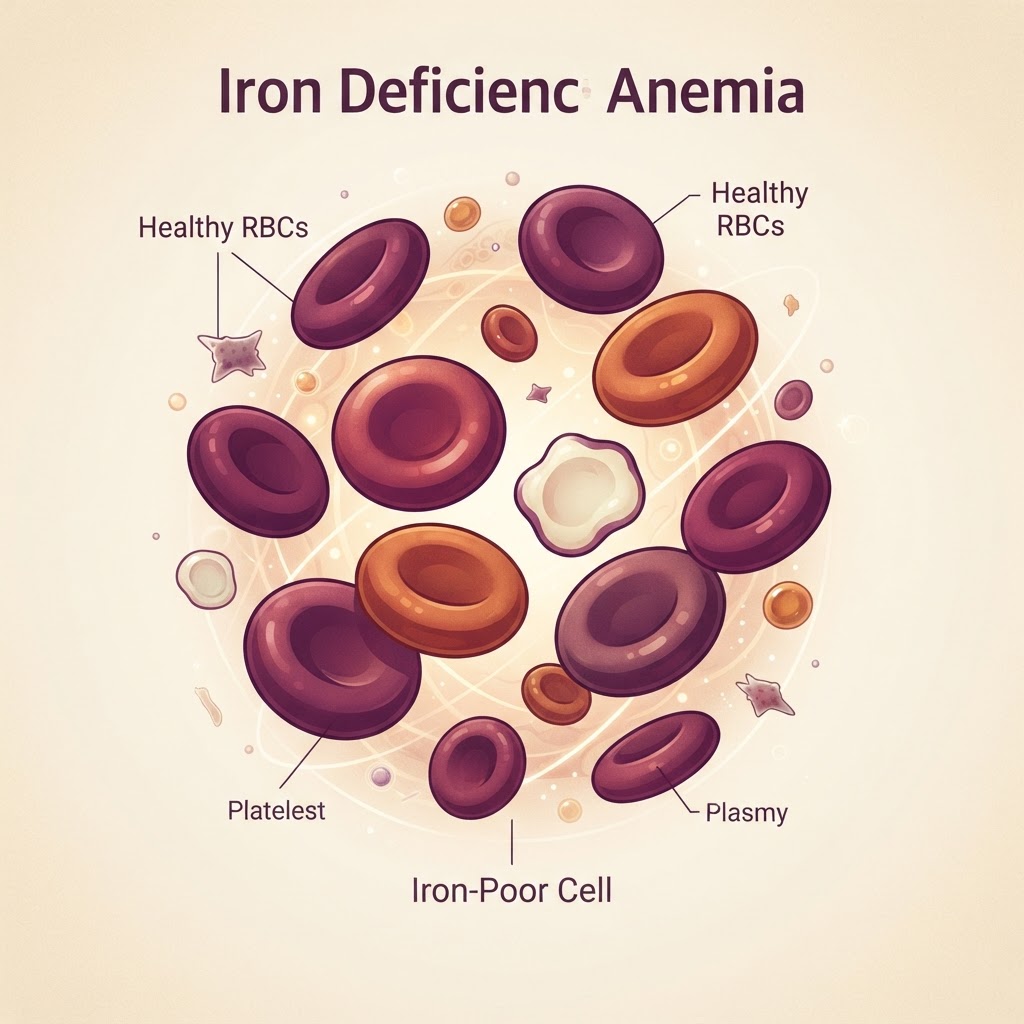
Iron is a key ingredient in hemoglobin — the protein inside red blood cells that grabs oxygen in the lungs and delivers it to every tissue in the body.
When iron runs low, the body can't make enough healthy hemoglobin, so it produces fewer and smaller red blood cells. With less oxygen reaching your muscles, brain, and organs, the whole system runs short on fuel. That's what produces the classic fatigue and weakness of anemia. Iron deficiency is the most common cause of anemia, and it usually develops slowly — which is part of why it's so often missed.
The key point: Iron deficiency anemia is a symptom, not just a diagnosis. Finding low iron should always prompt the question why — because the cause, from diet to blood loss, is what actually needs treating.
What causes it?
Iron deficiency develops when the body loses iron faster than it can replace it, doesn't take in enough, or can't absorb what it gets. The main drivers:
Blood loss
The most common cause. Heavy menstrual periods, or slow bleeding in the digestive tract from ulcers, polyps, or other conditions.
Not enough iron in the diet
Diets low in iron-rich foods like red meat, beans, and leafy greens — a particular risk for some vegetarians and vegans without planning.
Poor absorption
Conditions like celiac disease, inflammatory bowel disease, or surgery on the stomach or intestines can limit how much iron the body takes in.
Increased demand
Pregnancy and rapid growth in infancy and adolescence sharply raise the body's iron needs.
Who's most at risk
- Women with heavy or long menstrual periods
- Pregnant people, who need far more iron to support the baby
- Infants, young children, and teens in growth spurts
- People with digestive conditions or who've had gastrointestinal surgery
- Frequent blood donors and people with certain chronic illnesses
Signs and symptoms
Early on, iron deficiency may cause no symptoms at all. As it progresses, common signs include:
- Unusual tiredness, weakness, and low energy
- Pale skin, and pallor inside the lower eyelids or nail beds
- Shortness of breath and a fast or pounding heartbeat
- Dizziness, headaches, or trouble concentrating
- Cold hands and feet
- Brittle nails, hair loss, and cracks at the corners of the mouth
- Restless legs, especially at night
- Pica — unusual cravings for non-food items like ice, dirt, or starch
Easy to overlook: Because fatigue and breathlessness build gradually, many people chalk them up to a busy life or stress. Craving and crunching ice, or restless legs at night, are lesser-known clues worth mentioning to a clinician.
How it's diagnosed
Iron deficiency anemia is usually confirmed with simple blood tests:
- Complete blood count (CBC) — shows whether red blood cells are low, small, or pale.
- Ferritin — measures the body's stored iron; low ferritin is one of the earliest and clearest signs.
- Iron studies — assess how much iron is circulating and how well it's being carried.
If the cause isn't obvious — particularly in men and in women past menopause — a clinician may recommend further testing, such as evaluation of the digestive tract, to rule out a source of hidden bleeding.
Treatment and prevention
Treatment has two parts: replenishing iron, and correcting whatever caused the deficiency.
Replacing iron
- Oral iron supplements are the usual first step. Taking them with vitamin C can improve absorption; they're best guided by a clinician, since too much iron can be harmful.
- Intravenous (IV) iron may be used when pills aren't tolerated, absorption is poor, or levels need to be restored quickly.
- Blood transfusion is reserved for severe cases with significant symptoms.
Treating the cause
Managing heavy periods, treating an ulcer or digestive condition, or adjusting the diet is essential — otherwise the deficiency tends to return.
Diet and prevention
Iron-rich foods include lean red meat, poultry, seafood, beans and lentils, tofu, spinach, and iron-fortified cereals. Pairing plant sources of iron with vitamin C helps the body absorb them. Note that improvement takes time — replenishing the body's iron stores often takes several months of consistent treatment, even after symptoms ease.
Encouraging news: Once the cause is addressed and iron is restored, most people feel substantially better. Don't stop treatment early just because your energy returns — finishing the full course is what rebuilds your reserves.
Key statistics:
- #1 — Most common nutritional deficiency worldwide
- ~1.2B — People affected by iron deficiency anemia globally
- 3× — More common in women than men during reproductive years
- O₂ — Iron's core job: helping red cells carry oxygen through the body
Medical disclaimer: This article is for general informational and educational purposes only and is not a substitute for professional medical advice, diagnosis, or treatment. Iron supplements should be taken only under the guidance of a healthcare provider, as excess iron can be harmful and is especially dangerous to children. Always consult a qualified physician about anemia, its underlying cause, and the right treatment for you, and never disregard professional medical advice because of something you have read here.