
Multiple Myeloma: A Cancer of the Blood's Antibody Factory
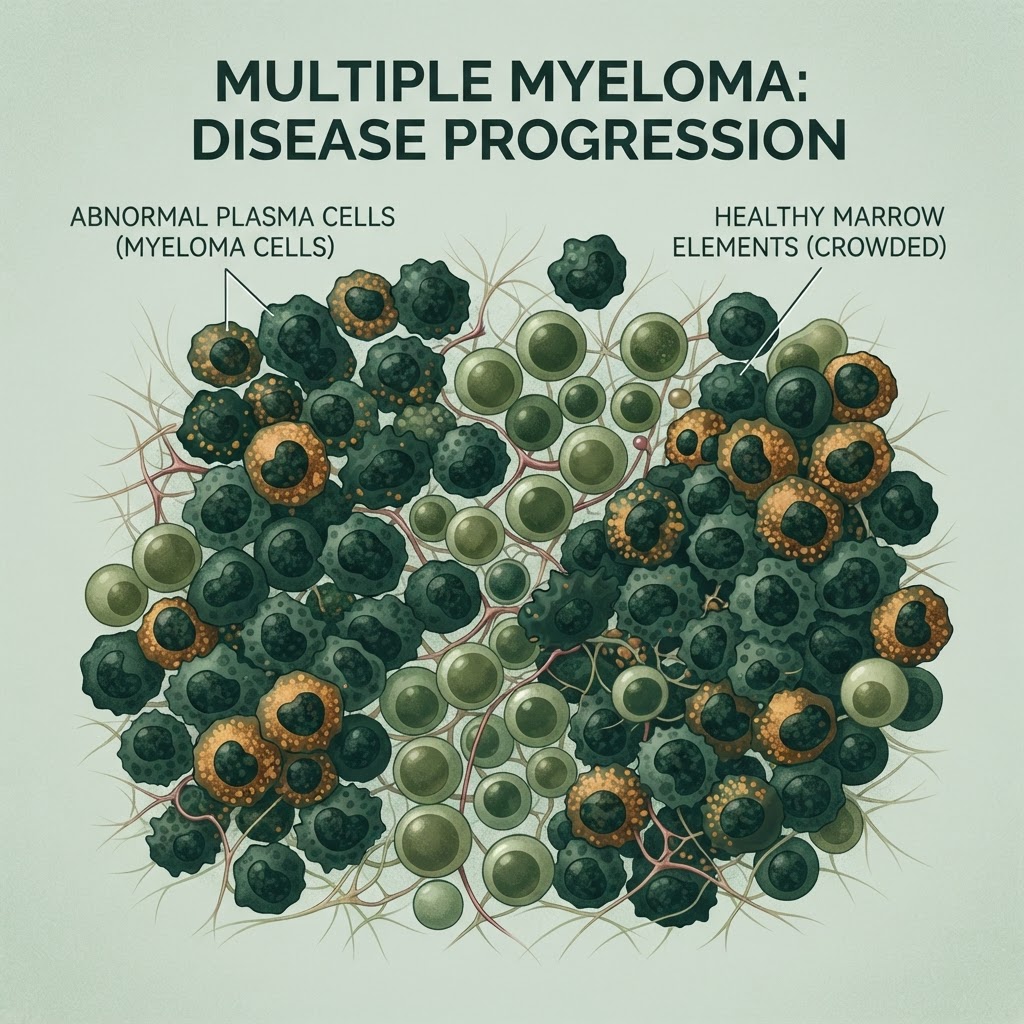
Multiple myeloma is a cancer of plasma cells — the immune cells in your bone marrow that make antibodies. When these cells grow out of control, they crowd out healthy blood cells and weaken bones. It's rarely curable, but today it's more treatable than ever.
What is multiple myeloma?
Plasma cells are a type of white blood cell that lives in your bone marrow and produces antibodies to fight infection. Multiple myeloma begins when one plasma cell becomes cancerous and multiplies uncontrollably.
These abnormal cells build up in the bone marrow and churn out a single useless antibody — called a monoclonal or "M" protein — instead of the diverse antibodies a healthy body needs. As myeloma cells accumulate, they crowd out normal blood cells, damage bone, and can overwhelm the kidneys. The "multiple" in the name reflects that it usually affects several areas of bone marrow at once.
A key precursor: Many people have a symptomless condition called MGUS (monoclonal gammopathy of undetermined significance), where a small amount of M protein is present without cancer. Only a small fraction progresses to myeloma each year, but it's why some people are monitored closely over time.
How it affects the body: the CRAB signs
Doctors often summarize the damage myeloma causes with the acronym CRAB, which captures its four hallmark effects:
C — Calcium elevated
Bone breakdown releases calcium into the blood, causing thirst, confusion, and constipation.
R — Renal (kidney) problems
M protein and high calcium can damage the kidneys' filtering ability.
A — Anemia
Crowded marrow makes fewer red blood cells, leading to fatigue and weakness.
B — Bone lesions
Myeloma weakens bone, causing pain, thinning, and fractures.
Signs and symptoms
Early myeloma often causes no symptoms and may be found on routine bloodwork. As it advances, common signs include:
- Bone pain, especially in the back, ribs, or hips
- Fatigue and weakness from anemia
- Frequent or recurring infections
- Unexplained bone fractures
- Excessive thirst, nausea, or confusion from high calcium
- Kidney problems detected on lab tests
- Unintended weight loss and loss of appetite
- Numbness or weakness, if a weakened spine presses on nerves
Risk factors
The exact cause isn't known, but several factors raise the risk:
- Age — risk rises steadily after 45, with most diagnoses in people over 60.
- Sex — slightly more common in men.
- Race — notably more common in Black populations, for reasons still being studied.
- MGUS — the precursor condition described above.
- Family history and certain environmental or chemical exposures.
How it's diagnosed
Diagnosing myeloma involves a combination of tests:
- Blood and urine tests — to detect M protein and check calcium, kidney function, and blood counts.
- Bone marrow biopsy — a sample of marrow confirms the diagnosis and reveals the percentage of cancerous plasma cells.
- Imaging — MRI, CT, or PET scans map bone damage throughout the body.
- Genetic testing — of the myeloma cells, which helps predict behavior and guide treatment choices.
Treatment and outlook
While multiple myeloma is generally not considered curable, it is highly treatable — and the past two decades have transformed what's possible. Treatment aims to control the cancer, relieve symptoms, and extend life while preserving its quality. Not everyone needs treatment right away; those with smoldering (early, symptomless) myeloma may be monitored first.
Main treatment approaches
- Targeted drug therapies — proteasome inhibitors and immunomodulatory drugs form the backbone of modern treatment.
- Monoclonal antibodies — that specifically flag myeloma cells for the immune system.
- Corticosteroids and chemotherapy — often combined with the therapies above.
- Stem cell transplant — high-dose treatment followed by rescue with the patient's own stem cells, an option for eligible patients.
- Immunotherapies like CAR-T and bispecific antibodies — newer approaches that harness the immune system, now available for many patients whose myeloma has returned.
Supportive care
Bone-strengthening medications, treatment of anemia and infections, kidney protection, and pain management are all important parts of living well with myeloma.
Reason for optimism: Myeloma today is often managed as a long-term, chronic condition. With a growing arsenal of therapies, many people cycle through periods of remission and treatment over many years — and clinical trials continue to push survival and quality of life higher.
Key statistics:
- 2nd — Most common blood cancer after non-Hodgkin lymphoma
- ~69 — Median age at diagnosis; most cases are in older adults
- 2× — Higher incidence among Black Americans than white Americans
- ↑↑ — Survival has risen sharply with new therapies over two decades
Medical disclaimer: This article is for general informational and educational purposes only and is not a substitute for professional medical advice, diagnosis, or treatment. Multiple myeloma is a complex cancer that requires individualized care from a qualified oncology team. Treatment options and outcomes vary widely by person and by the specific features of the disease. Always seek the guidance of a hematologist-oncologist or other physician with questions about diagnosis or treatment, and never disregard professional medical advice because of something you have read here.