
Obesity: Understanding a Complex Chronic Disease
Obesity is a chronic medical condition marked by excess body fat that can affect health. Modern medicine recognizes it as a disease shaped by genetics, biology, and environment — not a simple matter of willpower — and there are now more effective, compassionate ways to treat it than ever before.
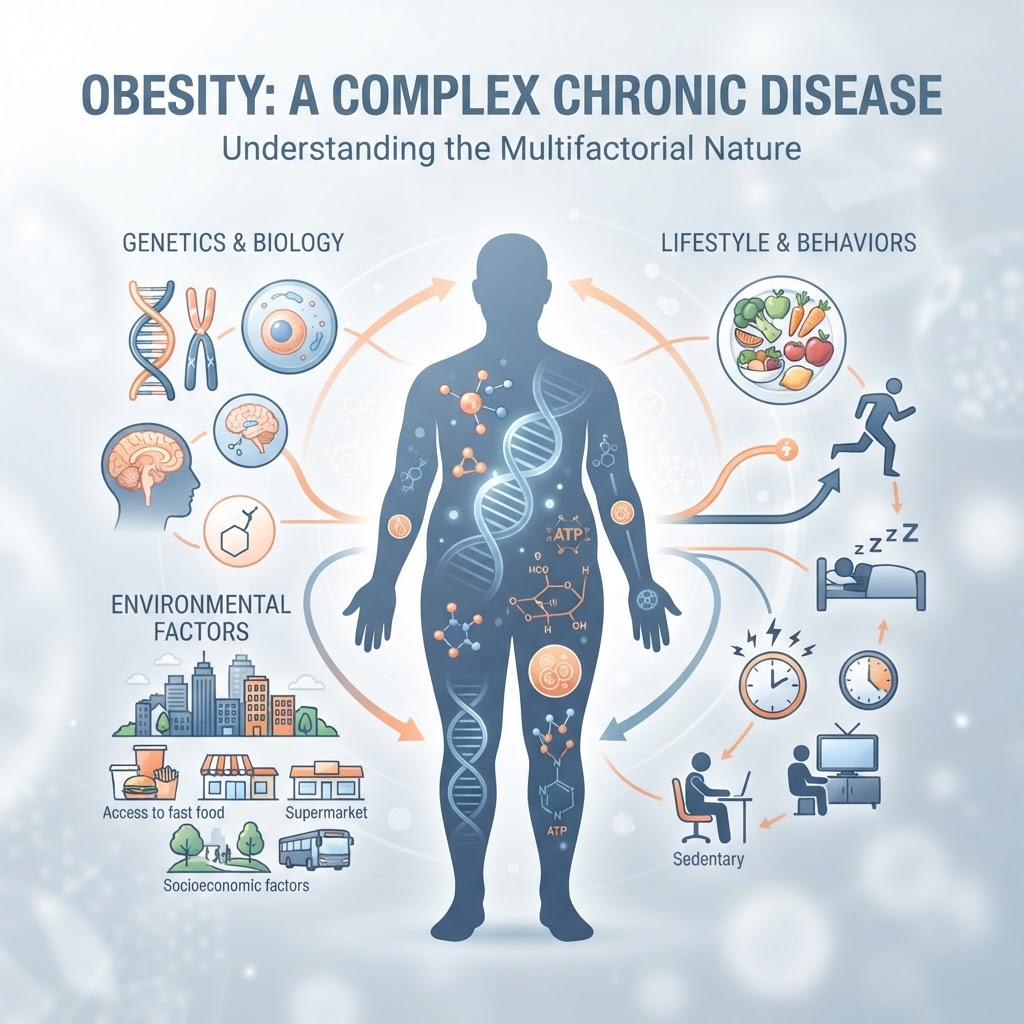
What is obesity?
Obesity is a chronic, relapsing disease in which excess body fat accumulates to a degree that can harm health. Leading medical organizations now classify it as a disease — a shift that reflects decades of research into its biological roots.
For a long time, obesity was viewed narrowly as a lifestyle choice or a failure of self-control. Science tells a more complex story. The body tightly regulates weight through hormones, brain signals, and metabolism, and in obesity these systems are dysregulated in ways that make weight gain easier and sustained weight loss genuinely difficult. Understanding this is the first step toward effective, respectful care.
Language matters: Person-first language — "a person with obesity" rather than "an obese person" — reflects that obesity is a condition someone has, not a definition of who they are. Weight stigma is itself harmful to health, and reducing it is part of good care.
What contributes to it?
Obesity rarely has a single cause. It develops from an interplay of factors, many outside a person's direct control:
Genetics & biology
Inherited traits influence appetite, metabolism, and where the body stores fat. Hormones that regulate hunger and fullness play a central role.
Environment
Easy access to calorie-dense food, limited access to fresh food, and communities built around driving rather than walking all shape daily habits.
Behavior & lifestyle
Eating patterns, physical activity, sleep, and stress each contribute — though they interact heavily with biology and environment.
Medical & social factors
Certain conditions and medications, poor sleep, chronic stress, and socioeconomic barriers can all promote weight gain.
Health impacts
Obesity increases the risk of a wide range of health conditions. The good news is that these are risks, not certainties, and even modest, sustained improvements in health can meaningfully lower them. Conditions associated with obesity include:
- Type 2 diabetes and insulin resistance
- High blood pressure, heart disease, and stroke
- Certain cancers
- Obstructive sleep apnea and breathing problems
- Osteoarthritis and joint strain
- Fatty liver disease
- Gallbladder disease
- Effects on mental health, often compounded by weight stigma
How it's assessed
Clinicians use several tools together to evaluate weight and health — and it's the whole picture, not any single number, that guides care.
- Body mass index (BMI) — a widely used screening measure based on height and weight. It's useful at a population level but imperfect: it doesn't distinguish muscle from fat, and its thresholds don't apply equally across all body types and ethnic groups.
- Waist measurement and body composition — help show where fat is stored, since fat around the abdomen carries more health risk.
- Overall health assessment — blood pressure, blood sugar, cholesterol, and other markers matter more than weight alone. A person can carry excess weight and still be metabolically healthy, or vice versa.
Beyond the scale: Because BMI has real limitations, many clinicians now emphasize metabolic health and function over a target on the scale. Improvements in fitness, blood sugar, and blood pressure are valuable health wins in their own right.
Treatment and management
Obesity care works best when it's individualized, long-term, and free of judgment. A qualified healthcare provider can help build a plan suited to a person's health, preferences, and circumstances. Approaches are typically combined rather than used alone.
Foundational care
Sustainable changes to eating patterns, physical activity, sleep, and stress management form the base of treatment. The emphasis is on lasting, realistic habits and overall wellbeing — best developed with professional guidance rather than restrictive quick fixes.
Behavioral and psychological support
Counseling, structured programs, and support for the emotional and psychological aspects of eating and health can be a powerful part of treatment.
Medications
A new generation of prescription medications — including GLP-1 receptor agonists — has substantially changed obesity treatment, helping many people achieve meaningful health improvements. These are prescribed and monitored by a clinician as part of a broader plan.
Metabolic and bariatric surgery
For some people with severe obesity or serious related conditions, surgery can be a safe and highly effective option, often improving or resolving conditions like type 2 diabetes.
A shift in understanding: Treating obesity as a chronic disease — like hypertension or diabetes — reframes it as something to manage over time with medical support, not a personal failing to overcome alone. That shift is opening the door to more effective and more humane care.
Key statistics:
- 1 in 8 — People worldwide were living with obesity as of recent global estimates
- 200+ — Health conditions linked to or worsened by obesity
- 2013 — Year major medical bodies formally recognized obesity as a disease
- 70+ — Genes identified that can influence body weight and fat storage
Medical disclaimer: This article is for general informational and educational purposes only and is not a substitute for professional medical advice, diagnosis, or treatment. Obesity is a complex, individual condition, and decisions about weight, nutrition, medication, or surgery should be made together with a qualified healthcare provider. Weight-loss medications and surgery carry risks and are not right for everyone. Always seek the guidance of a physician with questions about your health, and never disregard professional medical advice because of something you have read here.