
Sickle Cell Disease: An Inherited Change in the Blood
Sickle cell disease is a genetic blood disorder that reshapes red blood cells into stiff crescents that block blood flow and break down too soon. It's a lifelong condition — but care has advanced dramatically, and the first curative therapies are now a reality.
What is sickle cell disease?
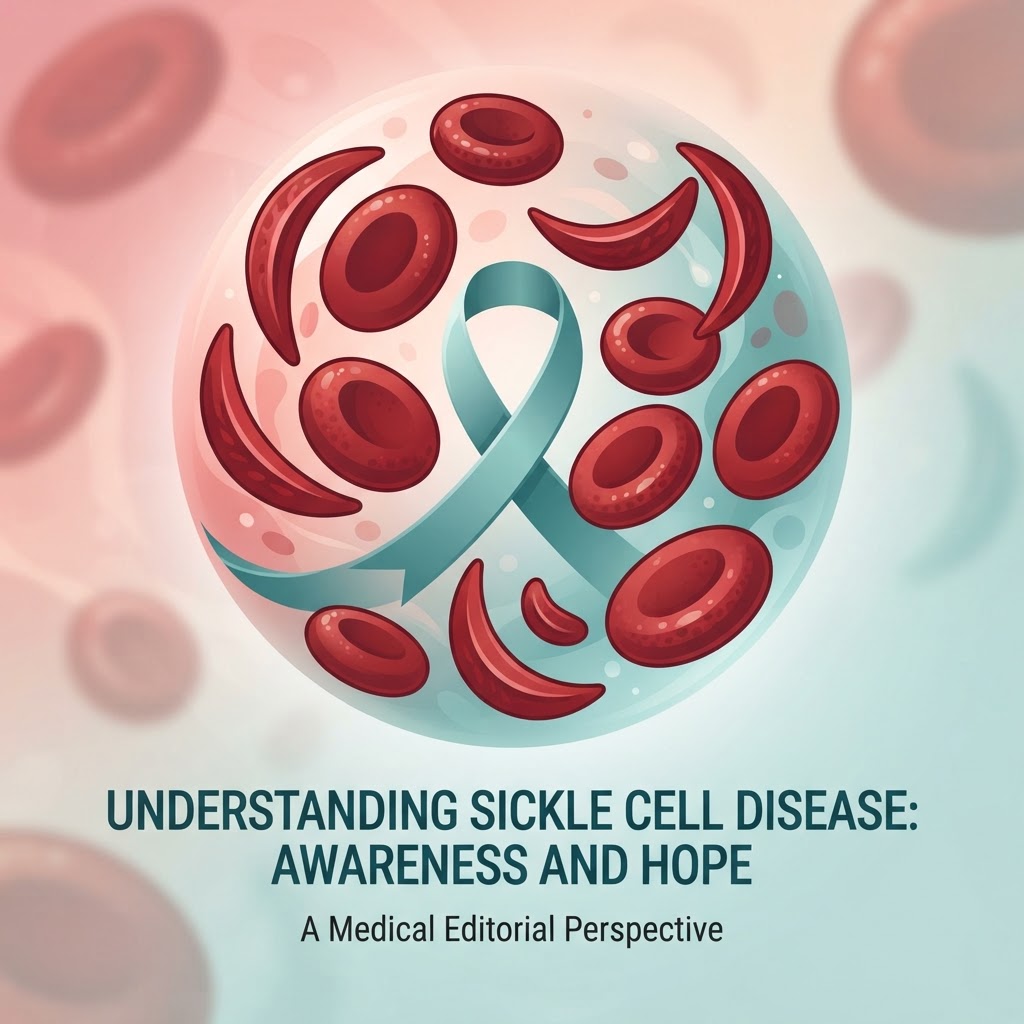
Healthy red blood cells are round and flexible, gliding easily through blood vessels to carry oxygen. In sickle cell disease, a change in hemoglobin — the oxygen-carrying protein — makes red cells rigid, sticky, and shaped like a crescent or sickle.
These misshapen cells cause two core problems. They get stuck and clog small blood vessels, cutting off oxygen and triggering episodes of intense pain and tissue damage. And they break apart far sooner than normal cells — living days instead of weeks — leading to chronic anemia. Over a lifetime, these effects can harm organs throughout the body. Sickle cell disease is present from birth and lasts a lifetime, but with good care many people live full, active lives.
A useful mental image: Picture flexible discs sliding through a narrow pipe versus rigid hooks that snag and pile up. That snagging — blocking flow and starving tissue of oxygen — is what drives most sickle cell complications.
The genetics: how it's inherited
Sickle cell disease is inherited, meaning it's passed from parents to children through genes — it is not contagious. It follows a recessive pattern:
- Two sickle genes (one from each parent) — a child has sickle cell disease.
- One sickle gene — a child has sickle cell trait. They usually have no symptoms but can pass the gene to their children.
The most common and typically most severe form is called HbSS. Other forms, such as HbSC and sickle beta-thalassemia, vary in severity. Sickle cell trait is common enough that knowing your own status matters when planning a family, since two carriers can have a child with the disease.
Who it affects — and why it's been overlooked: Sickle cell disease is most common in people of African descent, and also affects those with Mediterranean, Middle Eastern, Indian, Caribbean, and Hispanic ancestry. The sickle gene persists in these regions partly because carrying a single copy offers some protection against malaria. Despite being one of the most common inherited diseases, sickle cell care has historically been underfunded relative to its burden — and people living with it too often face gaps and bias in how their pain is treated. Closing that gap is a health-equity priority.
Signs and complications
Symptoms usually begin in early childhood and vary widely from person to person. The major ones include:
- Pain crises — sudden episodes of severe pain (vaso-occlusive crises), the hallmark of the disease, when sickled cells block blood flow. These can last hours to days.
- Chronic anemia — fatigue, weakness, pale or yellow-tinged skin, and jaundice from red cells breaking down.
- Swelling of the hands and feet — often one of the first signs in babies.
- Frequent infections — because the spleen is damaged over time; vaccines and preventive antibiotics are vital, especially in children.
- Delayed growth and delayed puberty.
- Vision problems from affected blood vessels in the eyes.
Serious complications to know
Sickle cell disease can cause medical emergencies, including acute chest syndrome (a dangerous lung complication), stroke — which can occur even in children — and organ damage over time. Prompt care for chest pain, breathing trouble, fever, or signs of stroke is essential.
How it's diagnosed
Sickle cell disease is usually identified very early:
- Newborn screening — routine in the U.S. and many countries, so most cases are caught at birth.
- Blood tests — hemoglobin analysis confirms the diagnosis and identifies the specific type.
- Prenatal and carrier testing — available for parents who want to know their status or their baby's before birth.
Treatment and management
Care focuses on preventing complications, managing pain, and — increasingly — offering a cure. A specialized care team makes a major difference.
Ongoing management
- Hydroxyurea — a long-established medication that reduces the frequency of pain crises and other complications for many people.
- Pain management — timely, adequate treatment of pain crises, which patients and families should never have to fight to receive.
- Blood transfusions — to treat and prevent certain complications, including stroke.
- Infection prevention — vaccinations and preventive antibiotics, particularly in early childhood.
- Newer targeted medications — several have been developed in recent years to reduce crises, with research ongoing.
Toward a cure
- Stem cell (bone marrow) transplant — can cure sickle cell disease, most often used in children with a matched donor.
- Gene therapy — newly approved approaches that modify a person's own cells offer a potential cure, a landmark advance for the field, though access and cost remain significant hurdles.
Everyday self-care
Staying well-hydrated, avoiding known triggers like extreme temperatures and high altitudes, keeping up with vaccinations, and maintaining regular specialist care all help reduce crises and protect long-term health.
A changing outlook: A generation ago, sickle cell disease sharply limited life expectancy. With newborn screening, preventive care, and now curative therapies, more people are living longer and better than ever — and the pace of progress is accelerating.
Key statistics:
- ~8M — People live with sickle cell disease worldwide
- 2 — Copies of the sickle gene needed to have the disease — one from each parent
- 1 in 13 — Black or African American babies born with sickle cell trait
- 2023 — First gene therapies approved as potential cures
Medical disclaimer: This article is for general informational and educational purposes only and is not a substitute for professional medical advice, diagnosis, or treatment. Sickle cell disease varies widely and requires individualized care from a qualified hematology team. Pain crises and complications such as chest pain, difficulty breathing, high fever, or signs of stroke require prompt medical attention. Always seek the guidance of a physician with questions about your health, and never disregard professional medical advice because of something you have read here.