
Sarcoidosis: When Inflammation Builds Tiny Clumps in the Body
Sarcoidosis is a disease in which the immune system forms small clusters of inflammatory cells — called granulomas — in one or more organs, most often the lungs. Its course is unpredictable: it can quietly fade on its own or become a long-term condition.
What is sarcoidosis?
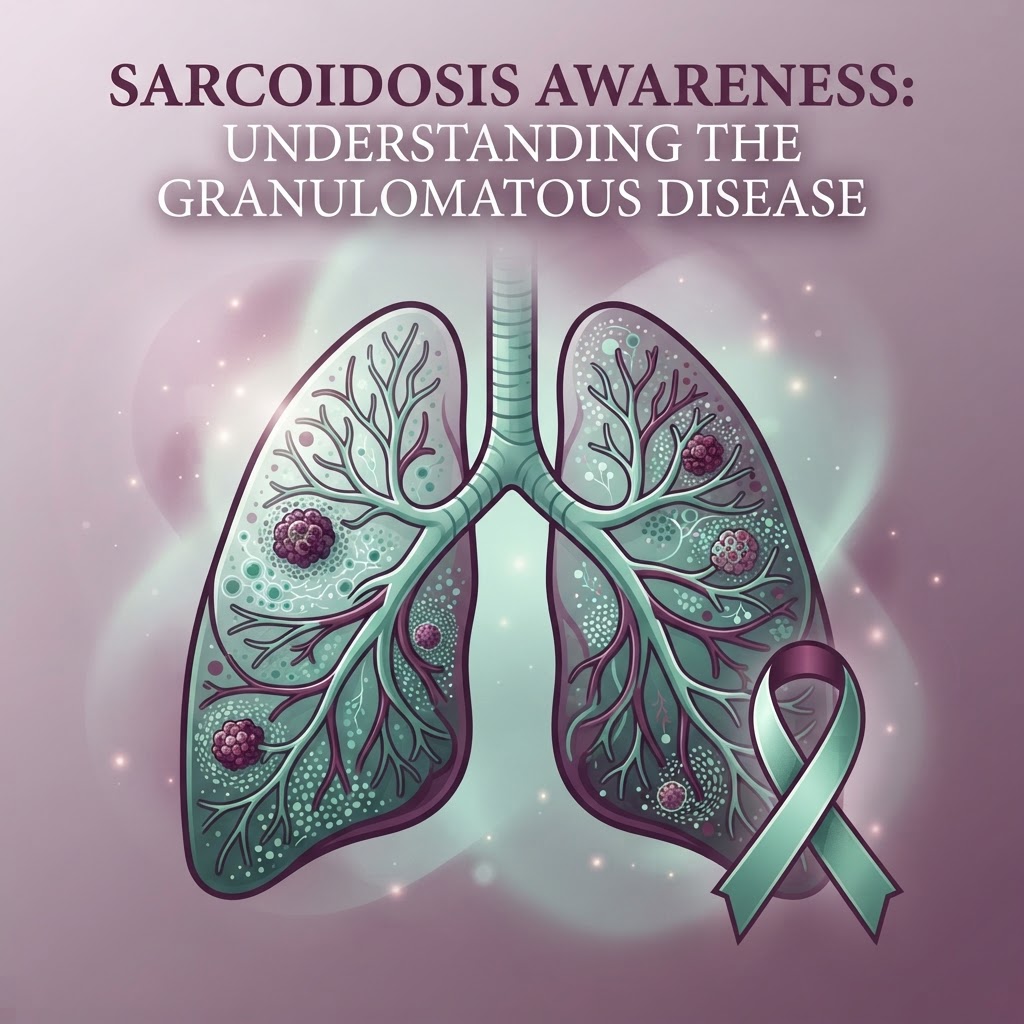
Sarcoidosis is an inflammatory disease. For reasons that aren't fully understood, the immune system overreacts and forms tiny lumps of inflammatory cells — granulomas — that collect in the body's tissues.
When enough of these granulomas gather in an organ, they can interfere with how it works. The lungs are the most common target, but sarcoidosis can appear almost anywhere — the lymph nodes, skin, eyes, heart, liver, and nervous system among them. What makes it especially puzzling is its unpredictability: in many people it improves or disappears on its own within a few years, while in others it lingers or becomes chronic.
What causes it? The exact cause is unknown. The leading theory is that sarcoidosis results from the immune system reacting to an unknown trigger — possibly something inhaled from the environment or an infectious agent — in people who are genetically susceptible. It is not contagious and is not a cancer.
Where sarcoidosis strikes
Because granulomas can form in different places, symptoms depend heavily on which organs are involved:
Lungs & lymph nodes
By far the most common site. Causes cough, shortness of breath, and chest discomfort; often found on a chest X-ray.
Skin
Rashes, bumps, or tender reddish nodules, often on the shins — sometimes the first visible sign of the disease.
Eyes
Inflammation (uveitis) causing redness, pain, light sensitivity, or blurred vision. Regular eye exams matter, as eye involvement can be silent.
Heart & nervous system
Less common but more serious. Cardiac sarcoidosis can disrupt heart rhythm; neurosarcoidosis can affect the brain and nerves.
Signs and symptoms
Many people with sarcoidosis have no symptoms and are diagnosed by chance. When symptoms do occur, they range from mild to significant:
- General: fatigue, low-grade fever, night sweats, swollen lymph nodes, and unexplained weight loss
- Lungs: a persistent dry cough, shortness of breath, and chest pain
- Skin: rashes, bumps, or tender reddish nodules
- Eyes: redness, pain, light sensitivity, or blurred vision
- Joints: aching, stiffness, or swelling
An acute form worth knowing: Löfgren syndrome is a sudden-onset form that combines fever, tender red nodules on the shins, and swollen chest lymph nodes, sometimes with joint pain. Though alarming, it usually carries a good outlook and often resolves on its own.
Who's at risk
Sarcoidosis can affect anyone, but some patterns stand out:
- Age — most often diagnosed between 20 and 60.
- Sex — slightly more common in women.
- Family history — having a close relative with sarcoidosis raises the risk.
A notable disparity: In the United States, sarcoidosis is more common in Black Americans — and tends to be more severe, more likely to affect multiple organs, and more often chronic. Black women carry a particularly high burden. These differences make awareness, early evaluation, and consistent specialist care especially important.
How it's diagnosed
There's no single test for sarcoidosis, and because its granulomas can mimic other conditions — including infections like tuberculosis — diagnosis involves ruling those out. Doctors typically use a combination of:
- Imaging — chest X-ray or CT scan to look for affected lungs and lymph nodes.
- Blood tests — to assess organ function and inflammation.
- Pulmonary function tests — to measure how well the lungs are working.
- Biopsy — a small tissue sample showing granulomas, while excluding other causes, often confirms the diagnosis.
- Targeted checks — eye exams and heart testing (such as an ECG), since these organs can be affected silently.
Treatment and outlook
Treatment depends on which organs are involved and how severe the disease is. A key point: not everyone needs treatment.
When to watch and wait
Because many cases improve on their own, people with mild symptoms may simply be monitored over time rather than treated right away.
When treatment is needed
- Corticosteroids — the main treatment, used to calm inflammation when organs are significantly affected.
- Steroid-sparing immunosuppressants — for people who need long-term control or can't tolerate steroids.
- Biologic medications — reserved for more stubborn or serious disease.
- Organ-specific care — such as treatment for the heart, eyes, or nervous system when those are involved.
Most people with sarcoidosis do well, and many recover fully. A smaller number develop chronic disease or lasting organ damage — such as lung scarring — which is why ongoing follow-up and prompt attention to the heart and eyes are so important.
The takeaway: Sarcoidosis is highly variable, and its outlook is often good. Because it can quietly affect vital organs, an accurate diagnosis and a care team that monitors the whole body are the best tools for staying ahead of it.
Key statistics:
- 90%+ — Of cases involve the lungs and chest lymph nodes
- 20–60 — Age range when sarcoidosis most often appears
- Many — Cases resolve on their own without treatment
- Any — Organ in the body can potentially be affected
Medical disclaimer: This article is for general informational and educational purposes only and is not a substitute for professional medical advice, diagnosis, or treatment. Sarcoidosis varies widely from person to person and can affect organs silently, so it requires individualized evaluation and monitoring by qualified healthcare providers. Always seek the guidance of a physician with questions about symptoms, diagnosis, or treatment, and never disregard professional medical advice because of something you have read here.