Nine More Drugmakers Just Signed On to Lower U.S. Drug Prices — Here's What It Actually Means for You
Teva, CSL, Astellas, UCB and five other manufacturers have agreed to "most-favored-nation" pricing, bringing the total to 26 companies. The savings are real — but experts say most of them won't show up at your pharmacy counter just yet.
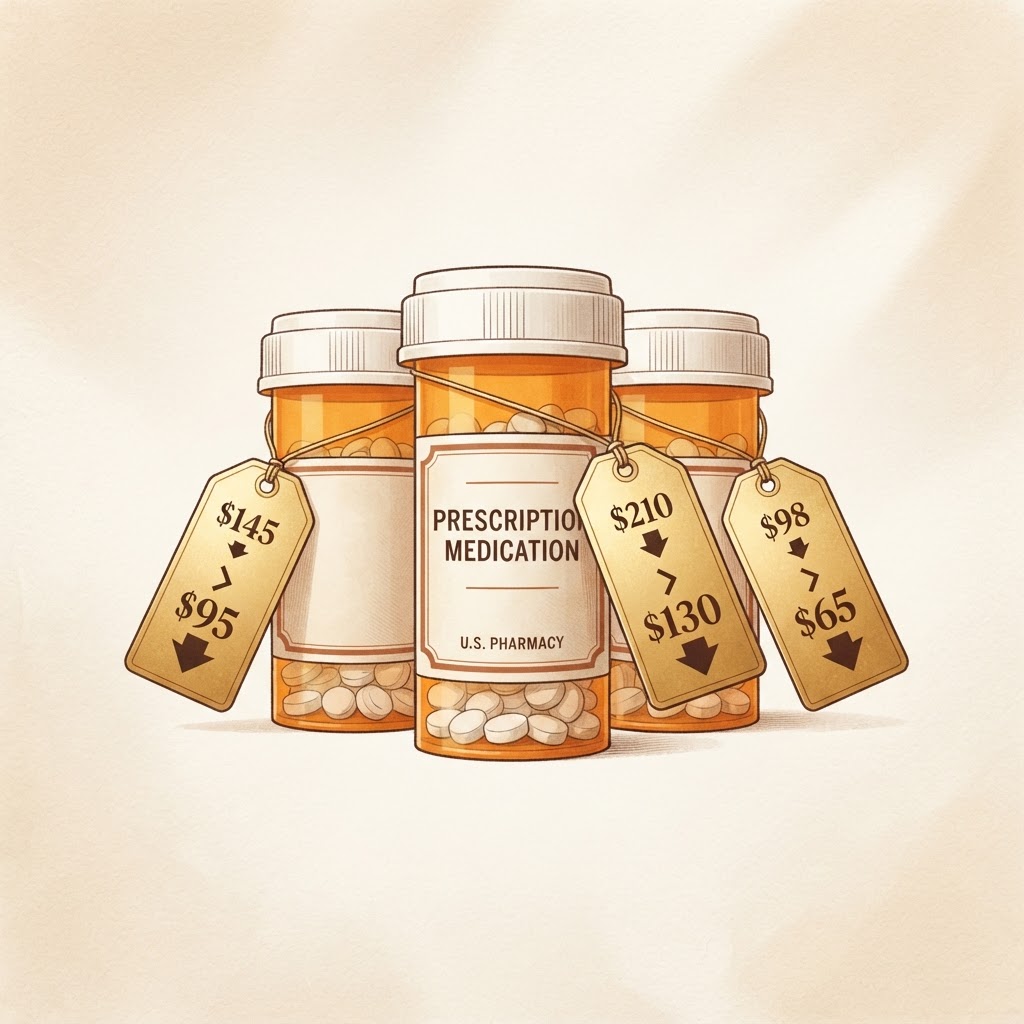
On August 31, the White House announced that nine additional pharmaceutical manufacturers have agreed to align their U.S. drug prices with the lowest prices paid in other developed nations — a policy known as "most-favored-nation" (MFN) pricing. The new signatories — Alcon, Astellas Pharma, BeOne Medicines, BridgeBio, CSL, Kyowa Kirin, Sun Pharma, Teva Pharmaceuticals, and UCB — join 17 companies that struck similar deals over the past year, including Pfizer, AstraZeneca, Merck, Novartis, and Sanofi.
The administration says the 26 participating manufacturers now cover roughly 89% of the branded drug market in the United States. For decades, Americans have paid two to four times more for the same brand-name medications than patients in Europe, Japan, or Canada — a gap these agreements are designed to close.
By the numbers:
- 26 — Drugmakers now in MFN pricing deals, covering ~89% of the branded drug market
- $19.6B — Committed by the nine new companies for U.S. manufacturing investment
- $600B — Projected 10-year savings from all MFN deals, per the Council of Economic Advisers
Who Are the Nine New Companies?
Unlike earlier rounds dominated by household names, this batch is made up of mid-sized and specialty players — but several of them touch millions of American patients every day.
- Teva Pharmaceuticals — The world's largest generic drugmaker; also contributing 45 metric tons of metronidazole and 4.8 tons of amlodipine to the national medicine reserve.
- CSL — Australian biotech leader in plasma therapies, vaccines, and rare disease treatments.
- Astellas Pharma — Japanese maker of transplant and oncology drugs; contributing 25 kg of the immunosuppressant tacrolimus to the reserve.
- UCB — Belgian company focused on epilepsy and immunology; contributing 163 tons of the anticonvulsant levetiracetam.
- Sun Pharma — India's largest drugmaker; contributing 71.4 tons of clindamycin and 6.75 tons of doxycycline (antibiotics).
- Alcon — Global leader in eye care products and surgical devices.
- BridgeBio — U.S. biotech focused on genetic and rare diseases.
- BeOne Medicines — Oncology-focused drugmaker (formerly BeiGene) with a growing cancer portfolio.
- Kyowa Kirin — Japanese specialty pharma company in rare disease, oncology, and nephrology.
What's Actually in the Deals
The agreements have three main pillars. First, every state Medicaid program gains access to these companies' drugs at most-favored-nation prices — meaning Medicaid pays what the lowest-paying developed country pays, both on existing products and on future medicines these companies launch. Second, discounted prices on select drugs are offered directly to cash-paying consumers through TrumpRx.gov, the administration's direct-purchasing website launched in February 2026. Third, the companies committed a combined $19.6 billion to building U.S. manufacturing capacity, and several are donating bulk active pharmaceutical ingredients to a new strategic reserve designed to protect against drug shortages — in exchange, participating companies receive relief from pharmaceutical tariffs that non-participants face.
The Equity Lens: Because these deals run chiefly through Medicaid, their biggest impact lands on the more than 70 million Americans the program covers — a population in which Black, Hispanic, and Indigenous communities are disproportionately represented. Stronger Medicaid finances and guaranteed access to lower-priced innovative drugs could narrow long-standing gaps in who can afford treatment.
Will You See Lower Prices at the Pharmacy?
Here's the honest answer: not necessarily, and not right away. Health policy researchers point out that the most immediate winner is the Medicaid program itself. One analysis published in JAMA estimated MFN pricing could save Medicaid about $8.6 billion per year — money that helps states keep coverage stable, but that patients don't see directly in their copays.
"The main benefit here is not to the patients using the drugs, but to the fiscal health of the program." — Luca Maini, health economist, Harvard Medical School (via TIME)
If you have commercial insurance through your employer, these agreements don't change your plan's negotiated prices. And Medicare — the program covering most older Americans — is largely outside these deals; some experts, including Harvard's Dr. Thomas Hwang, caution that companies may be signing Medicaid-focused agreements partly to avoid tougher Medicare price negotiations.
For uninsured and cash-paying patients, TrumpRx.gov is the piece to watch — and to watch critically. The administration reports more than $700 million in consumer savings since the site launched. But independent reporting has found that as of July, fewer than 12% of the 800-plus brand-name drugs from participating companies were actually listed on the platform, and listed prices aren't always the lowest available. Before assuming any site has your best price, it still pays to compare TrumpRx against discount programs like GoodRx and Cost Plus Drugs, manufacturer assistance programs, and your own insurance.
The Fine Print Experts Are Watching
There's also a structural question hanging over the whole most-favored-nation approach: it only works if prices abroad stay low. Researchers note that drugmakers have historically responded to MFN-style rules by raising prices in the comparison countries, or by delaying new drug launches in lower-priced markets so there's no cheap price to match. If that happens at scale, the "lowest developed-nation price" quietly drifts upward — and the projected savings shrink with it.
Still, the direction of travel is significant. A year ago, no major drugmaker had agreed to tie U.S. prices to international ones. Today, 26 companies representing nearly nine in ten branded prescriptions have — with billions in domestic manufacturing investment and a national medicine stockpile coming along for the ride. Whether that translates into relief you can feel at the register will depend on how aggressively these deals are enforced, how fast TrumpRx expands, and whether the holdouts still on the sidelines eventually sign on.
The bottom line: if you're on Medicaid or pay cash for prescriptions, keep an eye on your drug's price over the coming months — and if you're on a medication from one of these nine companies, check TrumpRx.gov and compare it against your current price before your next refill.
Sources:
- White House Fact Sheet: Deal with Nine Additional Pharmaceutical Manufacturers (Aug. 31, 2026)
- TIME: What Trump's Most-Favored-Nation Deal Means for Drug Prices (Sept. 1, 2026)
- Becker's Hospital Review: Trump administration strikes pricing deals with 9 more drug makers
- Fierce Pharma: Drugmakers reach U.S. drug price deals with Trump administration
This article is for informational purposes only and does not constitute medical or financial advice. Drug prices and program details change frequently — verify current pricing with your pharmacy or insurer.