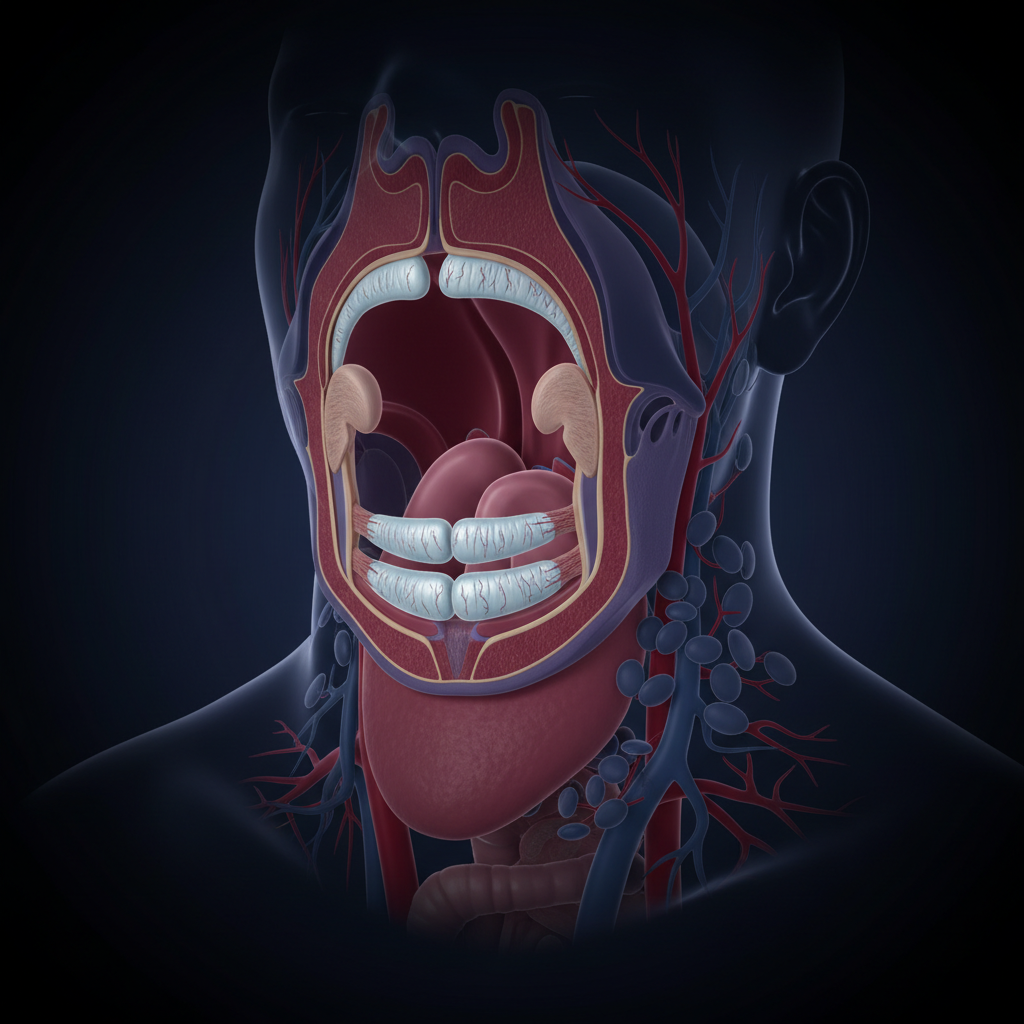
Throat Cancer
Throat cancer is a broad term referring to malignancies of the pharynx (oropharynx, nasopharynx, hypopharynx) and larynx (voice box) — structures essential to breathing, speaking, and swallowing. Most throat cancers are squamous cell carcinomas arising from the moist mucosal lining of these passages. The American Cancer Society estimates approximately 60,480 new cases of oral cavity and oropharyngeal cancer and about 12,290 new cases of laryngeal cancer in 2026, with a combined total of more than 17,000 deaths. The epidemiology of throat cancer is shifting significantly: while tobacco and alcohol historically drove the majority of cases, rates of HPV-associated oropharyngeal cancer have been rising steadily since the mid-2000s, with death rates for mouth and throat cancers increasing approximately 0.7% per year from 2009 through 2022 — reversing decades of prior decline. Men account for more than 80% of oropharyngeal cancer cases, and the average age at diagnosis is 64. Racial disparities are notable — Black men are more likely than White men to develop laryngeal cancer and more likely to die from it. Treatment typically involves surgery, radiation, chemotherapy, or a combination depending on location and stage, with five-year survival rates varying widely from roughly 30% for distant-stage disease to over 75% for localized cancers.