Multiple Myeloma
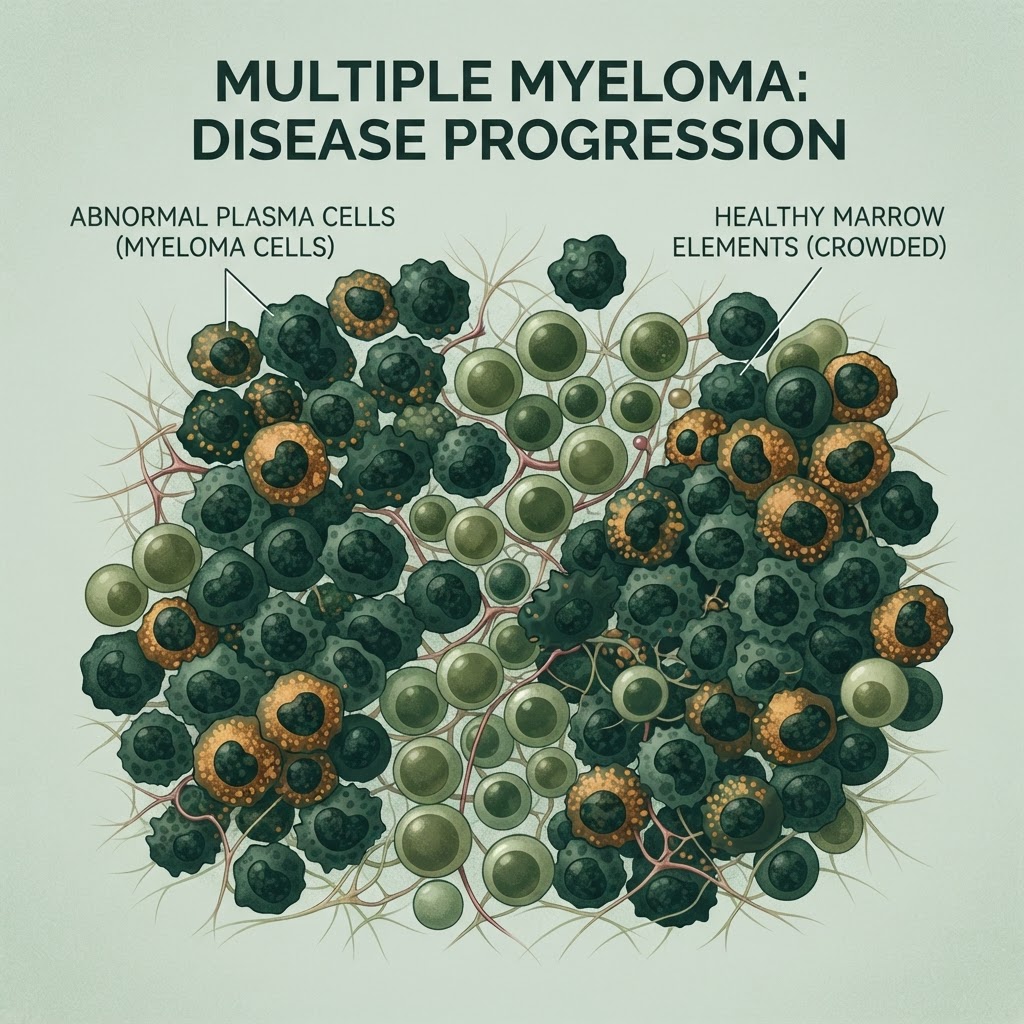
Multiple myeloma is a cancer of plasma cells — a type of white blood cell in the bone marrow responsible for producing antibodies. In multiple myeloma, abnormal plasma cells multiply uncontrollably, crowding out healthy blood-forming cells and producing abnormal proteins (M proteins) that can cause kidney damage, bone destruction, and a weakened immune system. It is the second most common blood cancer after non-Hodgkin lymphoma.
Symptoms
Bone pain (especially in the spine or chest), frequent infections, excessive thirst and urination, fatigue and weakness from anemia, unexplained weight loss, easy bruising or bleeding, kidney problems, frequent fractures or bone weakness, and in advanced cases, numbness or weakness in the legs. Early stages may cause no symptoms at all and are often discovered through routine blood tests.
Treatments
While multiple myeloma is generally considered treatable but not curable, treatments have advanced dramatically. Options include targeted therapy (proteasome inhibitors like bortezomib, and immunomodulatory drugs like lenalidomide), monoclonal antibodies (daratumumab, elotuzumab), steroids (dexamethasone), chemotherapy, stem cell transplant (autologous), CAR-T cell therapy, and bisphosphonates or denosumab for bone protection. Treatment is often individualized based on age, overall health, and disease stage.
Risk Factors
Age (most cases occur after 60), male sex, African American descent (twice the risk compared to white Americans), family history of multiple myeloma, having monoclonal gammopathy of undetermined significance (MGUS), obesity, and exposure to certain chemicals or radiation.
Prevalence
Multiple myeloma is relatively rare, accounting for about 1.8% of all new cancer diagnoses in the United States. An estimated 35,000 new cases are diagnosed annually in the U.S., with approximately 12,000 deaths. Approximately 150,000 people are living with the disease in the U.S. The median age at diagnosis is 69.